
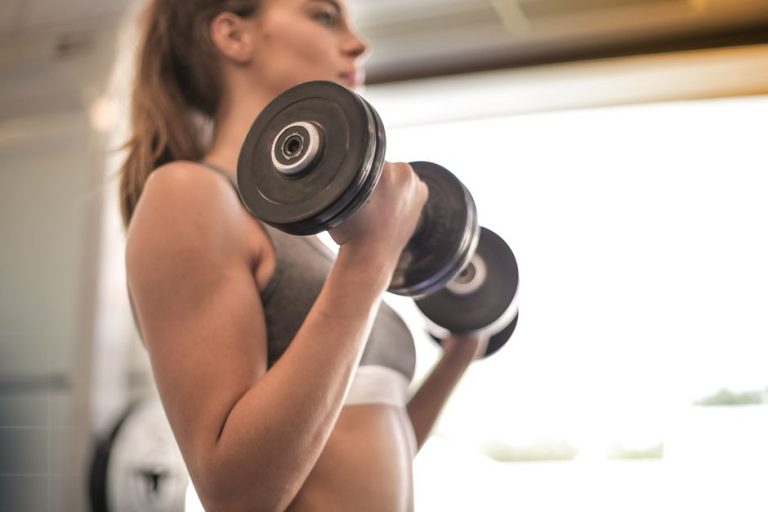
Some lean mass loss is expected, but most of the weight lost on semaglutide or tirzepatide is fat. In the major trials, fat mass fell two to three times more than lean mass. Enough protein and regular strength training are the best-supported ways to protect muscle.
Lean mass loss is not unique to these medications. It happens with almost any significant weight loss. The goal is to make sure as much of the loss as possible comes from fat.
What the trials actually measured
Two large trials measured body composition with DXA scans, and both found fat loss far outpaced lean loss. DXA is a low-dose X-ray scan that separates fat, lean tissue and bone.
Semaglutide: STEP 1
STEP 1 randomized 1,961 adults with overweight or obesity to weekly semaglutide 2.4 mg or placebo for 68 weeks; average weight loss was 14.9% with semaglutide versus 2.4% with placebo (Wilding et al., NEJM, 2021).
In a DXA substudy of 140 participants (Wilding et al., J Endocr Soc, 2021):
- Body weight fell 15.0%
- Total fat mass fell 19.3%, and visceral (belly) fat fell 27.4%
- Lean body mass fell 9.7%
- Lean mass as a share of total body mass rose by 3.0 percentage points
Tirzepatide: SURMOUNT-1
SURMOUNT-1 randomized 2,539 adults to tirzepatide 5, 10 or 15 mg or placebo for 72 weeks (Jastreboff et al., NEJM, 2022). In its DXA substudy of 160 participants (Look et al., Diabetes Obes Metab, 2025):
- Body weight fell 21.3% with tirzepatide versus 5.3% with placebo
- Fat mass fell 33.9%, versus 8.2% with placebo
- Lean mass fell 10.9%, versus 2.6% with placebo
- About 75% of the weight lost was fat and 25% was lean mass, the same split seen with placebo
Is lean mass the same as muscle?
No. Lean mass includes muscle, but also organs, bone, water and fluid. That matters when reading headlines about GLP-1 “muscle loss.”
A 2024 review in Diabetes, Obesity and Metabolism notes that reported lean mass loss varies widely across studies, and that MRI studies suggest muscle changes on these medications look largely adaptive: roughly what you would expect for the amount of weight lost, with improved muscle quality (Neeland et al., 2024). The same review cautions that older adults and people with more severe disease may be at higher risk of sarcopenia, meaning loss of muscle mass and function.
A 2026 meta-analysis of 20 randomized trials found lean mass made up 25% to 39% of weight lost on incretin medications, about the same as with lifestyle-only weight loss, and 17.5% when lifestyle programs included resistance training (Eisa and Barood, 2026).
How to protect muscle on a GLP-1
Protein, strength training and steady monitoring are the core of it. A 2025 joint advisory from the American College of Lifestyle Medicine, the American Society for Nutrition, the Obesity Medicine Association and The Obesity Society lays out practical priorities (Mozaffarian et al., 2025).
1. Eat enough protein, first
- Targets of 1.2 to 1.6 g of protein per kg of body weight per day have been proposed during active weight loss.
- A simpler absolute target of 80 to 120 g per day may be easier to follow.
- For people with obesity, using actual body weight can overestimate needs, so ask your provider which number fits you.
- Because appetite drops on these medications, the advisory suggests eating protein-rich foods first at meals.
If you have kidney disease or another condition that affects protein needs, set your target with your provider.
2. Lift, push or pull, several days a week
- The joint advisory recommends pairing GLP-1 treatment with strength training at least 3 times weekly plus at least 150 minutes of moderate aerobic activity to help preserve muscle and bone.
- For general health, the CDC recommends at least 150 minutes of moderate activity and at least 2 days of muscle-strengthening each week.
- Bodyweight exercises, bands and machines all count. Progress gradually and match the plan to your current fitness.
3. Do not under-eat to speed things up
The advisory lists nutritional deficiencies from calorie reduction, and muscle and bone loss, among the main challenges of GLP-1 treatment. Doses are increased step by step, and your provider adjusts the plan as you go. Talk with them before cutting your intake further on your own.
4. Track strength, not just the scale
The advisory recommends assessing muscle strength, function and body composition as part of care. At home, simple markers help: Are your usual lifts or carries getting harder? Are stairs or getting up from a chair harder? Tell your provider if so.
Where testosterone fits, and where it does not
Testosterone affects muscle in men, but it is not part of GLP-1 weight care. They are separate services with separate evaluations.
In men, obesity is strongly linked with lower testosterone. A review in Clinical Endocrinology found that testosterone treatment in randomized trials did not reduce body weight, though it modestly reduced fat mass and increased muscle mass; it also concluded testosterone cannot be routinely recommended for obesity-related low testosterone, with weight loss and lifestyle as first-line care (Grossmann, 2018).
If you are a man with symptoms such as low libido or fatigue, that is a question for a separate men’s health evaluation with its own labs, not an add-on to weight loss.
When to seek care urgently
MedlinePlus lists symptoms on semaglutide that need a call to your doctor right away or emergency care, including:
- Ongoing pain in the upper left or middle stomach that may spread to the back, with or without vomiting
- Pain in the upper stomach with yellowing of the skin or eyes, fever or clay-colored stools
- Swelling of the face, lips, tongue or throat, or trouble breathing or swallowing
- Fainting or dizziness, or a rapid or pounding heartbeat
- Decreased urination, or vision changes
What an appointment at Hormone Balance Centers looks like
Hormone Balance Centers offers GLP-1 weight management with semaglutide and tirzepatide by telehealth for eligible adults in Utah and Idaho, with secure video visits and evening appointments.
- Call or text 385-361-8549.
- Labs. Your provider decides which tests are appropriate.
- Meet online with Adam Russell, PA-C, a board-certified Physician Assistant with experience in endocrinology and internal medicine, to review symptoms, history, labs, risks and goals.
- A plan. If treatment is appropriate, you get an individualized care and monitoring plan.
GLP-1 care is $69 per month or $750 per year. Medication is billed separately: lower strengths start at $109 (semaglutide) and $119 (tirzepatide) per 35-day supply, and higher strengths cost more. Care is self-pay, with documentation available for possible out-of-network reimbursement.
Frequently asked questions
How much muscle do you lose on semaglutide?
In the STEP 1 body composition substudy, lean mass fell 9.7% while fat mass fell 19.3%, and lean mass became a larger share of the body (Wilding et al., J Endocr Soc, 2021). Lean mass includes more than muscle, so actual muscle loss may be smaller than the lean mass number suggests.
Does tirzepatide cause more muscle loss than semaglutide?
There is no clear answer yet, because direct comparisons are limited. A 2026 meta-analysis estimated lean mass at about 35% of weight lost with semaglutide and 25% with tirzepatide (Eisa and Barood, 2026), but the trials differed in design and people, so this is not a head-to-head result.
How much protein should I eat on a GLP-1?
A joint advisory notes proposed targets of 1.2 to 1.6 g per kg per day during active weight loss, or a simpler 80 to 120 g per day. Your provider can help set a number that fits your weight, kidney health and appetite.
Can I prevent muscle loss completely?
Probably not entirely, since some lean loss accompanies any large weight loss. But a meta-analysis found lifestyle programs with resistance training had the lowest share of lean loss, and protein plus strength training are the best-supported protections.
Start with a plan that protects muscle
Weight loss works best when it is mostly fat loss. Call or text 385-361-8549, read about our GLP-1 weight management program, or get started online.
Sources
- Wilding JPH, et al. Once-Weekly Semaglutide in Adults with Overweight or Obesity (STEP 1). N Engl J Med. 2021;384(11):989-1002. https://pubmed.ncbi.nlm.nih.gov/33567185/
- Wilding JPH, et al. Impact of Semaglutide on Body Composition in Adults With Overweight or Obesity: Exploratory Analysis of the STEP 1 Study. J Endocr Soc. 2021;5(Suppl 1):A16-A17. https://pmc.ncbi.nlm.nih.gov/articles/PMC8089287/
- Jastreboff AM, et al. Tirzepatide Once Weekly for the Treatment of Obesity (SURMOUNT-1). N Engl J Med. 2022;387(3):205-216. https://pubmed.ncbi.nlm.nih.gov/35658024/
- Look M, et al. Body composition changes during weight reduction with tirzepatide in the SURMOUNT-1 study of adults with obesity or overweight. Diabetes Obes Metab. 2025;27(5):2720-2729. https://pmc.ncbi.nlm.nih.gov/articles/PMC11965027/
- Neeland IJ, Linge J, Birkenfeld AL. Changes in lean body mass with glucagon-like peptide-1-based therapies and mitigation strategies. Diabetes Obes Metab. 2024;26 Suppl 4:16-27. https://pubmed.ncbi.nlm.nih.gov/38937282/
- Eisa N, Barood O. Lean Mass Changes With Incretin Therapy Versus Lifestyle Intervention: A Systematic Review and Meta-Analysis of Randomised Controlled Trials. Diabetes Obes Metab. 2026;28(6):4818-4827. https://pubmed.ncbi.nlm.nih.gov/41877354/
- Mozaffarian D, et al. Nutritional priorities to support GLP-1 therapy for obesity: a joint Advisory from the American College of Lifestyle Medicine, the American Society for Nutrition, the Obesity Medicine Association, and The Obesity Society. Am J Clin Nutr. 2025;122(1):344-367. https://pmc.ncbi.nlm.nih.gov/articles/PMC12612741/
- Centers for Disease Control and Prevention. Adult Activity: An Overview. https://www.cdc.gov/physical-activity-basics/guidelines/adults.html
- Grossmann M. Hypogonadism and male obesity: Focus on unresolved questions. Clin Endocrinol (Oxf). 2018;89(1):11-21. https://pubmed.ncbi.nlm.nih.gov/29683196/
- MedlinePlus. Semaglutide Injection. https://medlineplus.gov/druginfo/meds/a618008.html