
Usually not. Under Endocrine Society and American Urological Association guidelines, low testosterone is diagnosed only when a man has consistent symptoms and testosterone that is low on repeated morning blood tests. If your levels are truly normal, TRT is generally not recommended, and your symptoms deserve a careful look for other causes.
That answer can be frustrating if you feel tired, flat or uninterested in sex and a single lab came back “normal.” The good news is that “normal on one test” and “normal” are not always the same thing, and there are often other explanations worth finding.
What counts as normal testosterone?
The AUA treats a total testosterone below 300 ng/dL as a reasonable cutoff to support a diagnosis of low testosterone. That number only counts when it is measured correctly and confirmed.
According to the American Urological Association guideline, other medical societies have used cutoffs ranging from 230 to 350 ng/dL. There is no single magic number, which is one reason guidelines insist on repeat testing and symptoms together.
Timing and health affect the result:
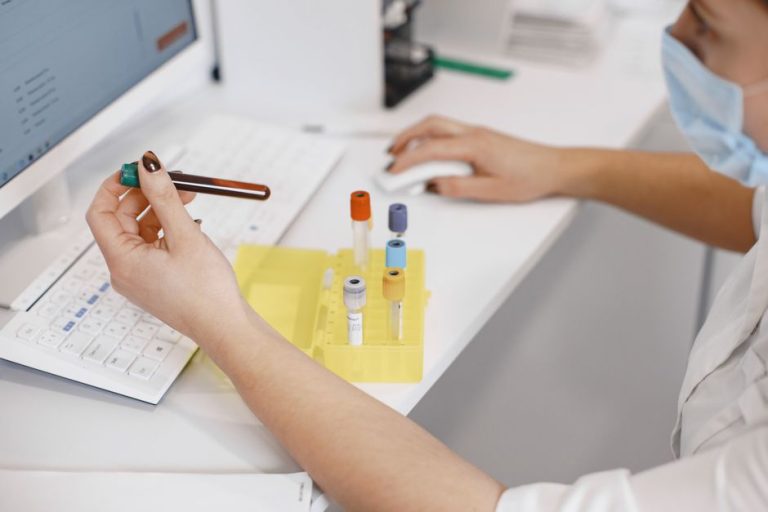
- Time of day. MedlinePlus notes that testosterone is usually highest in the morning, so samples are typically drawn between 7 and 10 a.m.
- Illness. Cleveland Clinic notes that being sick can temporarily lower testosterone, so a test during or after an illness may not reflect your usual level.
For context on how levels shift over the years, see our guide to testosterone levels by age.
What the guidelines require before TRT
Both major guidelines require two things: symptoms or signs of low testosterone, and consistently low levels on proper testing. One without the other is not a diagnosis.
The Endocrine Society’s 2018 guideline recommends:
- Diagnosing low testosterone only in men with symptoms and signs consistent with deficiency and unequivocally and consistently low testosterone.
- Measuring fasting, morning total testosterone with an accurate, reliable assay as the first test.
- Repeating the morning fasting test to confirm.
- Looking for the cause of low testosterone once it is confirmed.
The AUA guideline lines up closely. It calls for two early morning total testosterone measurements on separate occasions, and says a clinical diagnosis is made only when low levels are combined with symptoms or signs. FDA prescribing information for testosterone products likewise directs prescribers to confirm low levels with morning measurements on at least two separate days (FDA label, Azmiro, 2025).
Total vs. free testosterone
Total testosterone measures all of it; free testosterone measures only the portion not bound to proteins. Free testosterone can help when total testosterone is borderline or when binding proteins are unusual.
MedlinePlus explains that most testosterone in the blood is bound to proteins, mainly sex hormone binding globulin (SHBG) and albumin. Free testosterone is the unbound portion that is more readily available to the body.
When is free testosterone useful?
- Borderline total levels. The Endocrine Society recommends checking free testosterone when total testosterone is near the lower limit of normal.
- Conditions that change SHBG. The same guideline recommends it when a condition alters SHBG, because total testosterone can be misleading in that case.
- Not as a first test. The AUA does not recommend free testosterone as the primary diagnostic test. It notes free testosterone may help when total testosterone falls between 230 and 317 ng/dL.
So a “normal” total testosterone with symptoms is sometimes worth a closer look, but by a clinician using proper methods. Our article on total vs. free testosterone goes deeper.
What about borderline levels with strong symptoms?
The AUA acknowledges that some men with total testosterone above 300 ng/dL are highly symptomatic, and it asks clinicians to use judgment and further testing. That is not the same as treating normal levels routinely.
The guideline suggests evaluating these men with additional tests, which may or may not support a short treatment trial. The key point is careful evaluation, not a shortcut around the guideline.
Other causes of the same symptoms
Fatigue, low mood, low libido and weight gain have many causes besides testosterone. Finding the real cause often matters more than any hormone result.
MedlinePlus lists common causes of fatigue, including:
- Anemia or iron deficiency
- Depression or grief
- Sleep disorders such as insomnia or obstructive sleep apnea
- An underactive or overactive thyroid
- Medicines such as sedatives or antidepressants
- Alcohol or drug use
- Kidney or liver disease
Cleveland Clinic adds that obesity, poorly managed diabetes, sleep apnea, opioid use and some medicines are linked to low testosterone itself. It lists maintaining a healthy weight, staying active, getting enough sleep and treating sleep apnea as ways to help keep testosterone levels normal.
Why TRT is not recommended for normal levels
Testosterone carries real risks, and guidelines do not support treating men whose levels are not low. Without a confirmed deficiency, there is no diagnosis for the treatment to address.
FDA labeling describes risks including higher red blood cell counts, blood pressure increases, blood clots and reduced sperm production. In a large claims study, testosterone use was associated with higher short-term odds of venous blood clots even in men without a diagnosis of low testosterone (Walker et al., JAMA Internal Medicine, 2020).
Testing is often skipped in practice. A study of more than 5.5 million insured men aged 40 to 65 found that over 20% of men who started TRT had no testosterone lab test beforehand (Javed et al., Annals of Epidemiology, 2020).
What an appointment at Hormone Balance Centers looks like
Hormone Balance Centers offers telehealth care for eligible adults in Utah and Idaho by secure video, with evening appointments available and no walk-in office. Care is led by Adam Russell, PA-C, a board-certified Physician Assistant with experience in endocrinology and internal medicine.
- Call or text 385-361-8549.
- Complete labs. Your provider decides which tests are appropriate.
- Meet online to review your symptoms, history, labs, risks and goals.
- Receive an individualized care and monitoring plan if treatment is appropriate.
Hormone Balance Centers looks at the whole clinical picture, does not assume every symptom needs hormones, and prescribes only when medically appropriate. If testosterone is not the answer, the goal is still to help you understand your results. Learn more about low testosterone.
Frequently asked questions
Can I get TRT if my testosterone is in the normal range?
Generally, no. Endocrine Society and AUA guidelines call for symptoms plus consistently low morning testosterone on repeated tests before diagnosing low testosterone. A single normal result may still be worth repeating if it was drawn late in the day or during an illness.
Should I retest if my testosterone was normal but I have symptoms?
It can be reasonable. Guidelines recommend fasting, early morning testing, and a single test can be affected by timing or illness. Your provider can decide whether a repeat test or a free testosterone measurement makes sense.
Is free testosterone more accurate than total testosterone?
Not as a first test. Total testosterone is the standard starting point. Free testosterone is most helpful when total testosterone is borderline or when a condition changes SHBG, the protein that binds testosterone.
What else could cause low T symptoms?
Many things, including poor sleep, sleep apnea, depression, thyroid problems, anemia, medicines, alcohol and chronic illness. A good evaluation looks for these alongside hormone testing.
Get a clear answer
If you have symptoms and are not sure what your numbers mean, an evaluation with proper morning labs is the only way to know. Call or text 385-361-8549, or get started online. Read more about low testosterone and total vs. free testosterone.
This article is for education only and is not a diagnosis. Talk with a licensed clinician about your own health.
Sources
- Bhasin S, et al. Testosterone Therapy in Men With Hypogonadism: An Endocrine Society Clinical Practice Guideline. J Clin Endocrinol Metab. 2018;103(5):1715-1744. https://pubmed.ncbi.nlm.nih.gov/29562364/
- American Urological Association. Evaluation and Management of Testosterone Deficiency: AUA Guideline (2018, validity confirmed 2024). https://www.auanet.org/guidelines-and-quality/guidelines/testosterone-deficiency-guideline
- MedlinePlus (National Library of Medicine). Testosterone Levels Test. https://medlineplus.gov/lab-tests/testosterone-levels-test/
- MedlinePlus (National Library of Medicine). Fatigue. https://medlineplus.gov/ency/article/003088.htm
- Cleveland Clinic. Low Testosterone (Male Hypogonadism). https://my.clevelandclinic.org/health/diseases/15603-low-testosterone-male-hypogonadism
- U.S. Food and Drug Administration. Azmiro (testosterone cypionate) injection prescribing information, revised 07/2025. https://www.accessdata.fda.gov/drugsatfda_docs/label/2025/216318s005lbl.pdf
- Walker RF, et al. Association of Testosterone Therapy With Risk of Venous Thromboembolism Among Men With and Without Hypogonadism. JAMA Intern Med. 2020;180(2):190-197. https://pmc.ncbi.nlm.nih.gov/articles/PMC6865248/
- Javed Z, et al. Testosterone prescribing in men with depression and anxiety disorders. Ann Epidemiol. 2020;50:15-19. https://pubmed.ncbi.nlm.nih.gov/32800673/